Aloha!
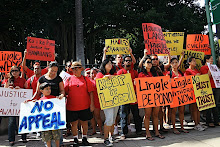
Last year, with your help, we protected the so-called "ceded" lands from being sold. This year, we want to do one simple thing.
Together, we can make elections for the Office of Hawaiian Affairs better. We hope you will help us.
QUESTION: What's wrong with the current OHA elections process?
ANSWER: Under the current OHA elections process, a candidate can win an OHA election even if he gets only 30% of the votes.
QUESTION: But, shouldn't the winner of important elections have support from more than 30% of the voters?
ANSWER: Yes! Justice and fairness requires that winning candidates in elections have support from at least 51% of the voters. We have to make OHA elections better.
QUESTION: How can I make OHA elections better?
ANSWER: You can make OHA elections better in less than 3 easy minutes.
* Call Representative Marcus Oshiro at (808) 586-6200 and kindly ask him to schedule Senate Bill 2378 SD2 for a Finance Committee hearing.
* If you need a phone script to help you, CLICK HERE.
Senate Bill 2378 SD2 will make OHA elections better. CLICK HERE to quickly learn more about Senate Bill 2378 SD2. After the bill is scheduled for its last hearing, we'll need you to spend another 2-3 minutes. But we'll e-mail you those details later.
Monday, March 22, 2010

Saturday, March 20, 2010
Why Senate Bill 2378 SD2 is important
Senate Bill 2378 SD2 democratizes Office of Hawaiian Affairs (OHA) elections.
We need to democratize OHA elections, because the current elections process allows a candidate to win even if that candidate only gets 30% of the votes. We explain this below.
Let's say we have four candidates (A, B, C & D) running for the same OHA trustee position and only 4,000 people vote for that position.
- Candidate A gets 1,200 votes (30%),
- Candidate B gets 1,100 votes (27.5%),
- Candidate C gets 850 votes (21.25%), and
- Candidate D gets 850 votes (21.25%).
Candidate A has only 30% of the votes (less than half), but wins the election because Candidate A has more votes than anyone else. Clearly more people (70%) voted against Candidate A, but the current election process can reward the candidate who only gets 30% of the votes. This happens because there is only one "special" election rather than a primary and a general election.
SB 2378 provides for a primary and general election for OHA Trustee. The new process would take the two candidates with the most votes (candidates A and B in the above scenario) and have them run against each other in a general election. The OHA general election would occur at the same time as the general elections for county, state, and federal offices. General elections take place in November of an election year.
Assuming that 4,000 people vote again for that particular OHA position in the general election, then, the candidate with at least 2,040 votes (51% or more) will win the election. In other words, the candidate who gets elected into office is the candidate that the majority of voters chose.
Senate Bill 2378 SD2 makes OHA elections better. But it's up to you to tell lawmakers that you want better elections for OHA.
You can make OHA elections better in just 2-3 minutes. Just call Representative Marcus Oshiro at 586-6200 and kindly ask him to schedule SB 2378 SD2 for a Finance Committee hearing. If you don't know exactly what to say, just CLICK HERE.
Wednesday, March 17, 2010
Phone Script for Calling Representative Marcus Oshiro
Representative Marcus Oshiro can be called at (808) 586-6200.
Hello, my name is ____________________. I'm calling Representative Marcus Oshiro to request that he schedule Senate Bill 2378 SD2 for a hearing with the House Finance Committee. My family and I would like to see Senate Bill 2378 pass out of the House Finance Committee. Please give Representative Marcus Oshiro this message for me. If he has any questions, he can contact me at _________________. Thank you very much.
Tuesday, March 16, 2010
e-mail template for Marilyn Lee
send e-mail to replee@Capitol.hawaii.gov
Dear Rep. Lee,
Hello, my name is (insert your name). I'm writing to you because OHA elections should be more democratic. Since you're the Vice-Chair of the House Finance Committee, I request that you arrange for SB 2378 SD2 to be heard by the Finance Committee. SB 2378 SD2 will make OHA elections better by providing a primary and general election. My family and I would like to see Senate Bill 2378 SD2 passed out of the Finance Committee. If you have any questions, feel free to reply to this e-mail.
Sincerely,
(insert your name)
Phone Script for Calling Representative Marilyn Lee
Representative Marilyn Lee can be called at (808) 586-9460.
Hello, my name is ____________________. I'm calling Representative Marilyn Lee because I want to request that she get Senate Bill 2378 SD2 scheduled for a hearing with the House Finance Committee. As you know, Representative Lee is the Vice-Chair of the House Finance Committee. My family and I would like to see Senate Bill 2378 passed out of the House Finance committee. Please give Representative Lee this message for me. If he has any questions, he can contact me at _________________. Thank you very much.
Thursday, September 24, 2009
The "Ceded" Lands Dispute: What does blood quantum have to do with it?

Itʻs been a while since there has been any public movement on the "ceded" lands issue. Many of you have been very supportive of Kupuʻainaʻs efforts earlier this year and last year. We wanted to share with you an update regarding a recently scheduled event that we think you might be interested in.
Most of the plaintiffs (Office of Hawaiian Affairs and four individuals) in the case that sought to stop the sale of so-called "ceded" lands have settled their claims with the State of Hawaiʻi. There is one sole plaintiff who is determined to have this case go all the way through, Dr. Jonathan Osorio.
On Thursday, October 1, 2009, Dr. Osorio will be joined by attorneys Naiwi Wurdeman and Yuklin Aluli in a panel discussion hosted by Ka Huli Ao Center for Excellence in Native Hawaiian Law at 12:45 at the William S. Richardson School of Law. This discussion panel will also be live-streamed at www.KaHuliAo.com.
For more information on Ka Huli Ao Center for Excellence in Native Hawaiian Law, you can visit its blog at www.KaHuliAo.com or its law school website at www.law.hawaii.edu/kahuliao
Tuesday, March 31, 2009
Proceed with caution when reading/hearing some local media reports
You may have heard by now that the United States Supreme Court has ruled on the "ceded" lands case. Unfortunately, several local media outlets do not explain the Supreme Court ruling adequately and, in my opinion, may inadvertently mis-lead the public.
Upon first glance, anyone might come to the conclusion that the State of Hawai'i can sell ceded lands. But, Kupu‘āina reads the opinion differently. When the Hawai'i Supreme Court made its landmark ruling last year placing a moratorium on the sale of "ceded" lands, it did so using both the 1993 Apology Resolution AND relevant state law. When the U.S. Supreme Court came out with its ruling this morning, it only ruled on the 1993 Apology Resolution and not state law. In fact, at the end of its decision, the U.S. Supreme Court made it clear that it has no authority to decide questions of Hawai'i state law or to provide redress for past wrongs except as provided for by federal law. The U.S. Supreme Court sent the case back down to the Hawai'i Supreme Court to proceed in a manner that is consistent with the U.S. Supreme Court's ruling.
The Attorney General Mark Bennett, sought to take this "ceded" lands case out of the Hawai'i Supreme Court. Now, however, the U.S. Supreme Court has put the case back into the hands of the State Supreme Court.
This morning there are two good interviews on the KGMB website that is helpful to people who want to understand today's ruling.
There is an interview with
Clyde Namuo explains how this ruling is exactly what the Office of Hawaiian Affairs hoped for once the Supreme Court decided to take up the case. Generally, the reason is because the ruling puts the case back into State court. Senator Hanabusa also explains why, the State, still can't sell "ceded" lands at this time. Hanabusa's statements are contrary to today's Honolulu Advertiser headline which reads, "US Supreme Court says state can sell ceded lands." This headline was later changed to read, "U.S. Supreme Court rules state has authority to sell ceded lands."
Kupu‘āina encourages the public to read the U.S. Supreme Court's short opinion on this issue rather than rely only on media reports. You can access the opinion at www.supremecourtus.gov/opinions/08slipopinion.html
Upon first glance, anyone might come to the conclusion that the State of Hawai'i can sell ceded lands. But, Kupu‘āina reads the opinion differently. When the Hawai'i Supreme Court made its landmark ruling last year placing a moratorium on the sale of "ceded" lands, it did so using both the 1993 Apology Resolution AND relevant state law. When the U.S. Supreme Court came out with its ruling this morning, it only ruled on the 1993 Apology Resolution and not state law. In fact, at the end of its decision, the U.S. Supreme Court made it clear that it has no authority to decide questions of Hawai'i state law or to provide redress for past wrongs except as provided for by federal law. The U.S. Supreme Court sent the case back down to the Hawai'i Supreme Court to proceed in a manner that is consistent with the U.S. Supreme Court's ruling.
The Attorney General Mark Bennett, sought to take this "ceded" lands case out of the Hawai'i Supreme Court. Now, however, the U.S. Supreme Court has put the case back into the hands of the State Supreme Court.
This morning there are two good interviews on the KGMB website that is helpful to people who want to understand today's ruling.
There is an interview with
- Clyde Namuo (OHA Administrator) http://tr.im/Namuo090331 and
- Colleen Hanabusa (Hawaii Senate President http://tr.im/Hanabusa090331.
Clyde Namuo explains how this ruling is exactly what the Office of Hawaiian Affairs hoped for once the Supreme Court decided to take up the case. Generally, the reason is because the ruling puts the case back into State court. Senator Hanabusa also explains why, the State, still can't sell "ceded" lands at this time. Hanabusa's statements are contrary to today's Honolulu Advertiser headline which reads, "US Supreme Court says state can sell ceded lands." This headline was later changed to read, "U.S. Supreme Court rules state has authority to sell ceded lands."
Kupu‘āina encourages the public to read the U.S. Supreme Court's short opinion on this issue rather than rely only on media reports. You can access the opinion at www.supremecourtus.gov/opinions/08slipopinion.html
Subscribe to:
Posts (Atom)

 Posts
Posts