Sunday, March 28, 2010
Shouldn't OHA elections be democratic?
Last year, with your help, we protected the so-called "ceded" lands from being sold. This year, we want to do one simple thing.
We want to democratize Office of Hawaiian Affairs elections. We hope you will help us.
QUESTION: What's wrong with the current OHA elections process?
ANSWER: Under the current OHA elections process, a candidate can win an OHA election even if he gets only 30% of the votes.
QUESTION: But, shouldn't the winner of important elections have support from more than 30% of the voters?
ANSWER: Yes! Justice, fairness and democratic principles all require that winning candidates in elections have support from at least 51% of the voters. We have to democratize OHA elections.
QUESTION: How can I democratize OHA elections?
ANSWER: You can democratize OHA elections in less than 3 easy minutes.
Send e-mail testimony to the House Finance Committee today! CLICK HERE for a testimony template.
Senate Bill 2378 SD2 will democratize OHA elections. CLICK HERE to quickly learn more about Senate Bill 2378 SD2. Come back and visit us often for updates.
SB 2378 SD2 Testimony template for FINANCE COMMITTEE
Copy and paste the below text and send it to FINtestimony@capitol.hawaii.gov BE SURE TO ADD YOUR NAME.
[ADD YOUR NAME]
House Finance Committee
March 29, 2010, 6pm
SB 2378 SD2
Dear Committee Chair Representative Marcus Oshiro, Vice-Chair Marilyn Lee and Committee Members,
My name is [ADD YOUR NAME]. I humbly urge you to support Senate Bill 2378 SD2 because it democratizes the elections for Office of Hawaiian Affairs (“OHA”).
An OHA candidate who gets only 30% of the votes can win the election under the current OHA elections process. This means that although 70% of voters may vote against a candidate, that candidate can still be elected. Clearly this elections process is inconsistent with the values of a democracy and needs to be changed.
OHA is an important governmental agency and candidates elected to OHA should have the support of more than 30% of the votes.
Please pass SB 2378 SD2 with a start date of January 1, 2012 instead of 2014.
Thank you for your time.
Monday, March 22, 2010
You have political muscle. We hope you flex it.
Aloha!
Last year, with your help, we protected the so-called "ceded" lands from being sold. This year, we want to do one simple thing.
Together, we can make elections for the Office of Hawaiian Affairs better. We hope you will help us.
QUESTION: What's wrong with the current OHA elections process?
ANSWER: Under the current OHA elections process, a candidate can win an OHA election even if he gets only 30% of the votes.
QUESTION: But, shouldn't the winner of important elections have support from more than 30% of the voters?
ANSWER: Yes! Justice and fairness requires that winning candidates in elections have support from at least 51% of the voters. We have to make OHA elections better.
QUESTION: How can I make OHA elections better?
ANSWER: You can make OHA elections better in less than 3 easy minutes.
* Call Representative Marcus Oshiro at (808) 586-6200 and kindly ask him to schedule Senate Bill 2378 SD2 for a Finance Committee hearing.
* If you need a phone script to help you, CLICK HERE.
Senate Bill 2378 SD2 will make OHA elections better. CLICK HERE to quickly learn more about Senate Bill 2378 SD2. After the bill is scheduled for its last hearing, we'll need you to spend another 2-3 minutes. But we'll e-mail you those details later.
Saturday, March 20, 2010
Why Senate Bill 2378 SD2 is important
Senate Bill 2378 SD2 democratizes Office of Hawaiian Affairs (OHA) elections.
We need to democratize OHA elections, because the current elections process allows a candidate to win even if that candidate only gets 30% of the votes. We explain this below.
Let's say we have four candidates (A, B, C & D) running for the same OHA trustee position and only 4,000 people vote for that position.
- Candidate A gets 1,200 votes (30%),
- Candidate B gets 1,100 votes (27.5%),
- Candidate C gets 850 votes (21.25%), and
- Candidate D gets 850 votes (21.25%).
Candidate A has only 30% of the votes (less than half), but wins the election because Candidate A has more votes than anyone else. Clearly more people (70%) voted against Candidate A, but the current election process can reward the candidate who only gets 30% of the votes. This happens because there is only one "special" election rather than a primary and a general election.
SB 2378 provides for a primary and general election for OHA Trustee. The new process would take the two candidates with the most votes (candidates A and B in the above scenario) and have them run against each other in a general election. The OHA general election would occur at the same time as the general elections for county, state, and federal offices. General elections take place in November of an election year.
Assuming that 4,000 people vote again for that particular OHA position in the general election, then, the candidate with at least 2,040 votes (51% or more) will win the election. In other words, the candidate who gets elected into office is the candidate that the majority of voters chose.
Senate Bill 2378 SD2 makes OHA elections better. But it's up to you to tell lawmakers that you want better elections for OHA.
You can make OHA elections better in just 2-3 minutes. Just call Representative Marcus Oshiro at 586-6200 and kindly ask him to schedule SB 2378 SD2 for a Finance Committee hearing. If you don't know exactly what to say, just CLICK HERE.
Wednesday, March 17, 2010
Phone Script for Calling Representative Marcus Oshiro
Representative Marcus Oshiro can be called at (808) 586-6200.
Hello, my name is ____________________. I'm calling Representative Marcus Oshiro to request that he schedule Senate Bill 2378 SD2 for a hearing with the House Finance Committee. My family and I would like to see Senate Bill 2378 pass out of the House Finance Committee. Please give Representative Marcus Oshiro this message for me. If he has any questions, he can contact me at _________________. Thank you very much.
Tuesday, March 16, 2010
e-mail template for Marilyn Lee
send e-mail to replee@Capitol.hawaii.gov
Dear Rep. Lee,
Hello, my name is (insert your name). I'm writing to you because OHA elections should be more democratic. Since you're the Vice-Chair of the House Finance Committee, I request that you arrange for SB 2378 SD2 to be heard by the Finance Committee. SB 2378 SD2 will make OHA elections better by providing a primary and general election. My family and I would like to see Senate Bill 2378 SD2 passed out of the Finance Committee. If you have any questions, feel free to reply to this e-mail.
Sincerely,
(insert your name)
Phone Script for Calling Representative Marilyn Lee
Representative Marilyn Lee can be called at (808) 586-9460.
Hello, my name is ____________________. I'm calling Representative Marilyn Lee because I want to request that she get Senate Bill 2378 SD2 scheduled for a hearing with the House Finance Committee. As you know, Representative Lee is the Vice-Chair of the House Finance Committee. My family and I would like to see Senate Bill 2378 passed out of the House Finance committee. Please give Representative Lee this message for me. If he has any questions, he can contact me at _________________. Thank you very much.
Thursday, September 24, 2009
The "Ceded" Lands Dispute: What does blood quantum have to do with it?

Itʻs been a while since there has been any public movement on the "ceded" lands issue. Many of you have been very supportive of Kupuʻainaʻs efforts earlier this year and last year. We wanted to share with you an update regarding a recently scheduled event that we think you might be interested in.
Most of the plaintiffs (Office of Hawaiian Affairs and four individuals) in the case that sought to stop the sale of so-called "ceded" lands have settled their claims with the State of Hawaiʻi. There is one sole plaintiff who is determined to have this case go all the way through, Dr. Jonathan Osorio.
On Thursday, October 1, 2009, Dr. Osorio will be joined by attorneys Naiwi Wurdeman and Yuklin Aluli in a panel discussion hosted by Ka Huli Ao Center for Excellence in Native Hawaiian Law at 12:45 at the William S. Richardson School of Law. This discussion panel will also be live-streamed at www.KaHuliAo.com.
For more information on Ka Huli Ao Center for Excellence in Native Hawaiian Law, you can visit its blog at www.KaHuliAo.com or its law school website at www.law.hawaii.edu/kahuliao
Tuesday, March 31, 2009
Proceed with caution when reading/hearing some local media reports
You may have heard by now that the United States Supreme Court has ruled on the "ceded" lands case. Unfortunately, several local media outlets do not explain the Supreme Court ruling adequately and, in my opinion, may inadvertently mis-lead the public.
Upon first glance, anyone might come to the conclusion that the State of Hawai'i can sell ceded lands. But, Kupu‘āina reads the opinion differently. When the Hawai'i Supreme Court made its landmark ruling last year placing a moratorium on the sale of "ceded" lands, it did so using both the 1993 Apology Resolution AND relevant state law. When the U.S. Supreme Court came out with its ruling this morning, it only ruled on the 1993 Apology Resolution and not state law. In fact, at the end of its decision, the U.S. Supreme Court made it clear that it has no authority to decide questions of Hawai'i state law or to provide redress for past wrongs except as provided for by federal law. The U.S. Supreme Court sent the case back down to the Hawai'i Supreme Court to proceed in a manner that is consistent with the U.S. Supreme Court's ruling.
The Attorney General Mark Bennett, sought to take this "ceded" lands case out of the Hawai'i Supreme Court. Now, however, the U.S. Supreme Court has put the case back into the hands of the State Supreme Court.
This morning there are two good interviews on the KGMB website that is helpful to people who want to understand today's ruling.
There is an interview with
Clyde Namuo explains how this ruling is exactly what the Office of Hawaiian Affairs hoped for once the Supreme Court decided to take up the case. Generally, the reason is because the ruling puts the case back into State court. Senator Hanabusa also explains why, the State, still can't sell "ceded" lands at this time. Hanabusa's statements are contrary to today's Honolulu Advertiser headline which reads, "US Supreme Court says state can sell ceded lands." This headline was later changed to read, "U.S. Supreme Court rules state has authority to sell ceded lands."
Kupu‘āina encourages the public to read the U.S. Supreme Court's short opinion on this issue rather than rely only on media reports. You can access the opinion at www.supremecourtus.gov/opinions/08slipopinion.html
Upon first glance, anyone might come to the conclusion that the State of Hawai'i can sell ceded lands. But, Kupu‘āina reads the opinion differently. When the Hawai'i Supreme Court made its landmark ruling last year placing a moratorium on the sale of "ceded" lands, it did so using both the 1993 Apology Resolution AND relevant state law. When the U.S. Supreme Court came out with its ruling this morning, it only ruled on the 1993 Apology Resolution and not state law. In fact, at the end of its decision, the U.S. Supreme Court made it clear that it has no authority to decide questions of Hawai'i state law or to provide redress for past wrongs except as provided for by federal law. The U.S. Supreme Court sent the case back down to the Hawai'i Supreme Court to proceed in a manner that is consistent with the U.S. Supreme Court's ruling.
The Attorney General Mark Bennett, sought to take this "ceded" lands case out of the Hawai'i Supreme Court. Now, however, the U.S. Supreme Court has put the case back into the hands of the State Supreme Court.
This morning there are two good interviews on the KGMB website that is helpful to people who want to understand today's ruling.
There is an interview with
- Clyde Namuo (OHA Administrator) http://tr.im/Namuo090331 and
- Colleen Hanabusa (Hawaii Senate President http://tr.im/Hanabusa090331.
Clyde Namuo explains how this ruling is exactly what the Office of Hawaiian Affairs hoped for once the Supreme Court decided to take up the case. Generally, the reason is because the ruling puts the case back into State court. Senator Hanabusa also explains why, the State, still can't sell "ceded" lands at this time. Hanabusa's statements are contrary to today's Honolulu Advertiser headline which reads, "US Supreme Court says state can sell ceded lands." This headline was later changed to read, "U.S. Supreme Court rules state has authority to sell ceded lands."
Kupu‘āina encourages the public to read the U.S. Supreme Court's short opinion on this issue rather than rely only on media reports. You can access the opinion at www.supremecourtus.gov/opinions/08slipopinion.html
Monday, March 23, 2009
Kupu‘āina Live! Webcast #15
Webisode #15 2003-03-23 Kupu‘āina Live!
In today's Kupu‘āina Live! We explain why the recent SuperFerry ruling isn't something to necessarily worry about in drafting "ceded" lands legislation. We also talk about what we consider to be a "sneaky" change in the language of SB 1677, that most people don't know about.
Mahalo for your support.
The rumor was true!

Last week, we wrote about a rumor we heard regarding an unexpected change regarding Senate Bill 1677.
Finally, the information has been made available online. If you haven't read the original SB 1677, you might not notice the difference. SB 1677 originally required a two-thirds approval for the sale of "ceded" lands. Media reports and capitol insiders suggested that a two-thirds approval is difficult to achieve so a two-thirds approval effectively prevents the sale of "ceded" lands. But recently, the State House of Representatives' Water, Land & Ocean Resources Committee (WLO) and the Judiciary Committee (JUD) have changed the language of SB 1677. Instead of requiring a two-thirds approval for the sale of lands, now, a two-thirds dis-approval is needed to stop the sale of lands. Below is the relevant changed language.
(2) Making proposed sales or exchanges of state lands subject to legislative disapproval by:
(A) The adoption of a resolution by a two-thirds majority vote of either the senate or the house of representatives; or
(B) The adoption of a concurrent resolution passed by simple majority vote of both houses of the legislature.
This change in the House, after SB 1677 already passed the Senate, means that this bill will most likely need to be brought to conference for the Senate and House to discuss the bill, assuming SB 1677 is passed out of the House Finance Committee (FIN).
It is very disappointing that the two committees, WLO and JUD, changed the language. A good amount (the majority actually) of testimony supported 1677 before the language of a two-thirds majority dis-approval was made.
As of the time of this posting, SB 1677 has not yet been scheduled for a hearing with the FIN committee. We will keep you updated.
Tuesday, March 17, 2009
What's going on at the capitol?
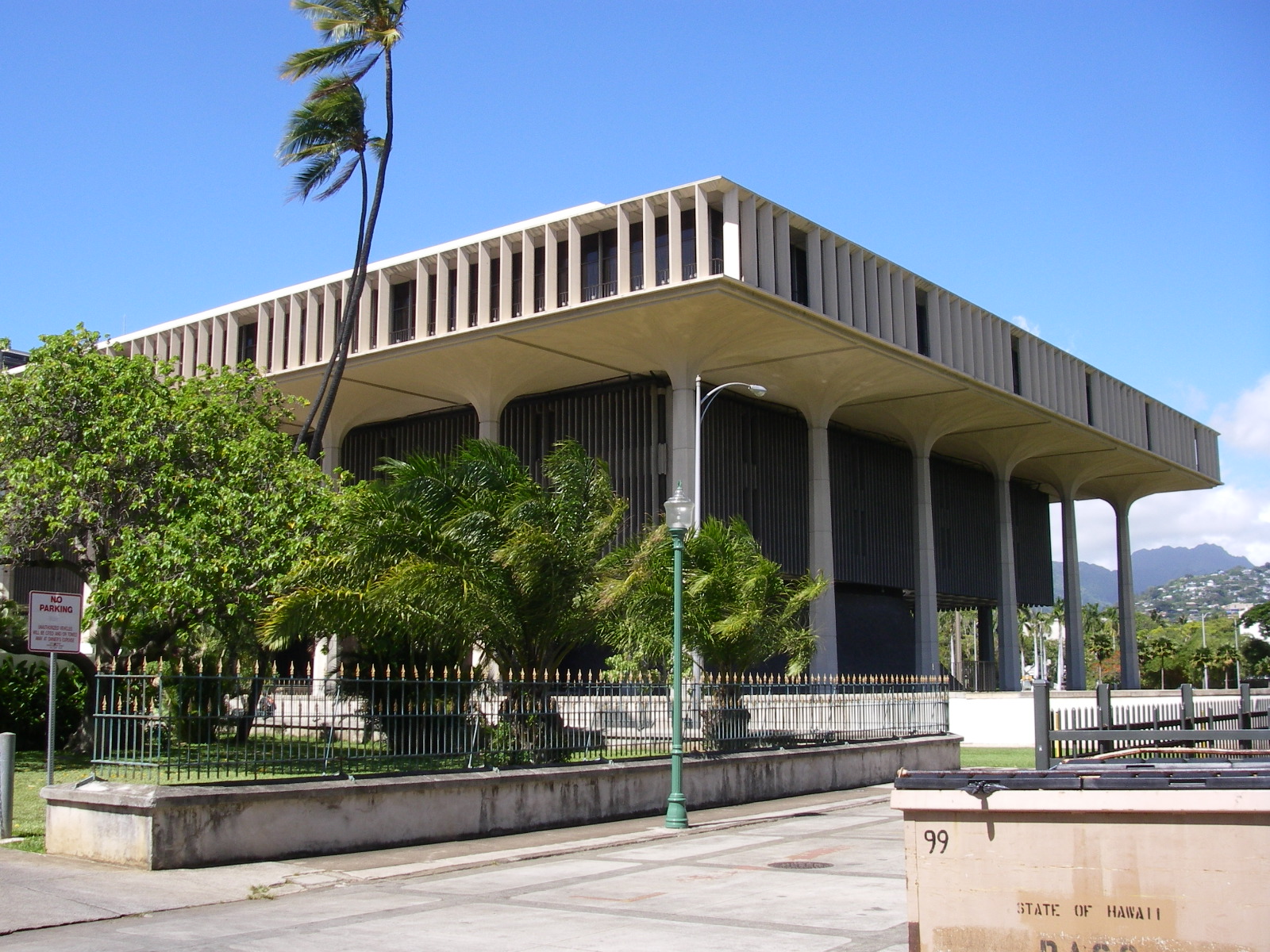
Late last night, Kupu‘āina received a credible tip that the language of SB 1677 was being revised. Instead of requiring a two-third majority approval vote for the sale of "ceded" lands, reportedly, the revised version would allow sales but require a two-thirds dis-approval vote of the legislature.
A two-thirds dis-approval vote is a VERY BAD idea and the exact opposite of what is proposed in SB 1677. Local newspapers have reported, and legislative insiders have said, that a two-thirds approval is difficult to achieve. Acknowledging this, we can conclude that a two-thirds approval vote is difficult and therefore, sales of "ceded" lands will be difficult. However, if only a two-thirds disapproval is required to prevent sales of "ceded" lands, then we can conclude that, since a two-thirds majority vote is difficulty to achieve, then it will be difficult to stop a sale of "ceded" lands.
I spoke with a few people this morning. Apparently, a few others have heard the same thing. Information isn't available online yet. Mark Bennett testified in opposition to this bill, yet it was passed. No indication was given at the committee hearings on 3/13/09 that the changes made to Bill 1667 included a "two-thirds disapproval."
As we get more information, we'll be sure to keep you updated.
Sunday, March 15, 2009
We Need You To Send E-mails to the House This Time

We previously asked you to send e-mails to the Senate. We now need you to send e-mails supporting SB 1085, to the State House of Representatives.
E-mails should be sent to HAWtestimony@capitol.hawaii.gov and reps@capitol.hawaii.gov Please include kupuaina@gmail.com in the BCC (Blind Carbon Copy). We'll appreciate it and it gives us some idea how many e-mails the Representatives get.
We have templates for you to use if you don't know what to write in an e-mail. Please pick ONE of the templates below.
We also have a special template for our supporters who do not live in Hawai‘i. CLICK HERE for the special out-of-Hawai‘i template.
In addition, please do not forget about our Just 5 Minutes a Day Campaign. Learn more by CLICKING HERE.
Mahalo for your continued support. Please encourage family, friends and co-workers to support these efforts.
Lastly, don't forget to watch our Live-Streaming webcast, Kupu‘āina Live! at 5:30 pm Mondays at StopSellingCededLands.com

Saturday, March 14, 2009
Legislative Updates Senate Bills 1085 and 1677

If you've been keeping up with us on Twitter, you may have seen that on Friday, the House Committees on Water, Land & Ocean Resources (WLO) and Judiciary (JUD) passed Senate Bill 1677. You can find the status of SB 1677 by going to tinyurl.com/SB1677stat or CLICKING HERE.
Three people spoke to the committee:
- UH West O‘ahu Chancellor Gene Awakuni,
- Attorney General Mark Bennet, and
- Derek Kauanoe of the Kupu‘āina Coalition
Chancellor Awakuni did not testify for or against SB 1677 but expressed concern that the current language of the bill was too broad and could affect the UH O‘ahu campus, which he says does not sit on ceded lands. He expressed a desire to see the language narrowed in such a way so as to not impact the West O‘ahu campus in a manner that was not intended.
AG Mark Bennett, testified in opposition of SB 1677. From what I can recall, he emphasized that in the history of the State of Hawai‘i, no governor has abused authority in a way that "ceded" lands have been sold in substantial portions. I also remember Mark Bennett describing support for the current method of selling "ceded" lands in the legislature. If I understand correctly, the current process requires a two-thirds opposition of the state legislature. SB 1677 would require a two-thirds majority vote for a sale of "ceded" lands. From what I remember, he also commented that as a practical matter, SB 1677 does not make sense.
Derek Kauanoe testified in support of SB 1677 but expressed concern that it did not adequately reflect the public policy of the Legislature as declared in Senate Concurrent Resolution 40 (SCR 40). You can check out SCR 40 at http://tinyurl.com/09SCR40stat. SCR 40 declared the public policy of the State of Hawai‘i is to honor the decision of the Hawai‘i Supreme Court. In addition, SCR 40 also provided that appealing to the U.S. Supreme Court "is detrimental to the interests of all of the people of Hawai‘i and to the ongoing reconciliation process between the State and the Native Hawaiian people." Kauanoe also urged the two committees to adopt key language in SB 1085. You can check out SB 1085 by going to tinyurl.com/09SB1085stat. Generally, Kauanoe asked that SB 1677 be revised to better reflect SB 1085.
The committees passed SB 1677 with amendments, however, we're still waiting to see what specific amendments are being added.
I noticed today, that some time in the late afternoon yesterday (3/13/09) that the House Committee on Hawaiian Affairs has scheduled a hearing for SB 1085 on Wednesday, March 18, 2009 at 9am in room 329. Mahalo goes out to Representative Mele Carroll for scheduling a hearing and giving more than 48 hours notice on this. This prompt scheduling provides people with a good amount of time to write testimony, for or against the bill, and the opportunity to meet the deadline as well.
In our opinion, SB 1085 is a better bill than SB 1677 for a few reasons:
- SB 1085, unlike SB 1677, is a re-affirmation of the Hawai‘i Supreme Court's "ceded" lands case opinion
- SB 1085, unlike SB 1677, also re-affirms the need for reconciliation with Native Hawaiians
- SB 1085, unlike SB 1677, places an actual moratorium (freeze) on the sale of ceded lands
- SB 1085, unlike SB 1677, provides a comprehensive process for the sale of ceded lands once the moratorium (freeze) is lifted.
- SB 1085, unlike SB 1677, is consistent with the Hawai‘i Legislature's expressed public policy found in Senate Concurrent Resolution 40.
We urge everyone to send e-mail testimonials to HAWtestimony@capitol.hawaii.gov in support of SB 1085. Over the next day or so, we will be putting together a more complete e-mail list in addition to a few templates for people to send through e-mail. Mahalo for your support and please don't forget to watch Kupu‘āina Live! on Monday at 5:30pm at our website stopsellingcededlands.com.
Wednesday, March 11, 2009
SB 1677 is scheduled for a hearing
Just a few moments ago, we learned that earlier today, the House of Representatives scheduled Senate Bill 1677 for a hearing THIS FRIDAY!
This scheduling occurred a day after the Senate passed Senate Bill 1085, which is a much better bill than SB 1677. Go to tinyurl.com/KupuCast09-03-09 to watch the webcast where we discuss why SB 1085 is better than SB 1677.
Anyway, it is important that you copy and paste the below e-mail addresses and send out the e-mail below to:
WLOtestimony@capitol.hawaii.gov, JUDtestimony@capitol.hawaii.gov, mailinglist@capitol.hawaii.gov, repito@capitol.hawaii.gov, rephar@capitol.hawaii.gov, repcabanilla@capitol.hawaii.gov, repchang@capitol.hawaii.gov, repchong@capitol.hawaii.gov, repcoffman@capitol.hawaii.gov, repherkes@capitol.hawaii.gov, repclee@capitol.hawaii.gov, repluke@capitol.hawaii.gov, repmorita@capitol.hawaii.gov, repsagum@capitol.hawaii.gov, repching@capitol.hawaii.gov, repthielen@capitol.hawaii.gov, repkaramatsu@capitol.hawaii.gov, repbelatti@capitol.hawaii.gov, repcarroll@capitol.hawaii.gov, repmckelvey@capitol.hawaii.gov, repmizuno@capitol.hawaii.gov, repboshiro@capitol.hawaii.gov, repsouki@capitol.hawaii.gov, reptsuji@capitol.hawaii.gov, repwakai@capitol.hawaii.gov, repmarumoto@capitol.hawaii.gov
Please BCC us at kupuaina@gmail.com
Please cut and paste the e-mail template below
[Insert Name Here]
House Committee on Water, Land & Ocean Resources
House Committee on Judiciary
Friday, March 13, 2009 at 2:00pm
SB 1677
Dear Committee Chair Ken Ito, Madame Vice-Chair Sharon Har and members of the Committee on Water, Land, & Ocean Resources,
Dear Committee Chair Jon Karamatsu, Vice-Chair Ken Ito, and members of the Committee on Judiciary,
My name is [insert name]. I submit testimony in support of Senate Bill 1677 on the condition that SB 1677 be amended to better reflect the Hawai‘i Legislature’s policy as defined in Senate Concurrent Resolution 40, passed by the Senate and adopted by the House of Representatives last month.
Through Senate Concurrent Resolution 40, as members of the Legislature, you
Passing SB 1677, in its current form, does not reflect the public policy described in Senate Concurrent Resolution 40.
I urge you to add the language below to SB 1677:
Chapter 171, Hawaii Revised Statutes, is amended by adding a new section to be appropriately designated and to read as follows:
"§171- Limitation on sale and transfers. The State shall not dispose of any lands in the public land trust, as described in subsection 171-18(a), whether by lease with option to purchase, sale, or exchange, except as provided in subsection 171-18(d); provided that the State may dispose of lands in the public land trust pursuant to subsection 171-18(c), if one of the following conditions is met:
(1) The claims of the native Hawaiian people, as defined in the United States Apology Resolution, Pub. L. No. 103-150, 107 Stat. 1510 (1993), have been resolved;
(2) The legislature finds pursuant to a concurrent resolution adopted by at least two-thirds majority vote of the members to which each house is entitled that the State no longer supports reconciliation between the State and the native Hawaiian people; or
(3) The approval of the disposition of the public lands trust land by lease with option to purchase, sale, or exchange occurs after December 31, 2014."
In addition to the above language, I also urge you to add the language below:
Notwithstanding any law to the contrary, the State, its political subdivisions, boards, agencies, departments, and entities created pursuant to state law, may hold or manage public land trust lands, as described in subsection (a), by lease, permit, license, easement, exchange, or set aside. In addition, upon the occurrence of an event as described in section 171- (1), (2), or (3), the State, its political subdivisions, boards, agencies, departments, and any other state entity may dispose of public land trust lands, whether by lease with option to purchase, sale, or exchange, provided that all of the following conditions are met:
(1) The State establishes a compelling state interest for the disposition;
(2) There is no reasonable alternate means to accomplish the compelling state interest;
(3) The disposition is limited to accomplishing the compelling state interest; and
(4) The disposition is approved by the legislature by concurrent resolution adopted by at least two-thirds majority vote of the members to which each house is entitled.
The conditions described in subsection (c)(1) to (4) shall not prevent the State from:
(1) Disposing of remnants, as defined in section 171-52;
(2) Providing easements to public utilities and government agencies pursuant to section 171-95; or
(3) Engaging in land exchanges pursuant to sections 171-50 and 171-51."
The above proposed language better reflects the public policy of our Legislature. Any and all text in the current form of SB 1677 that contradicts this proposed language should be omitted/stricken so as to recognize that the proposed language above is the language recognized in the Bill.
I urge you to pass 1677 only with amendments. I also urge you to schedule a hearing for SB 1085 which better reflects the public policy declared by our legislature.
Thank you for this opportunity to submit testimony.
[Insert your name]
This scheduling occurred a day after the Senate passed Senate Bill 1085, which is a much better bill than SB 1677. Go to tinyurl.com/KupuCast09-03-09 to watch the webcast where we discuss why SB 1085 is better than SB 1677.
Anyway, it is important that you copy and paste the below e-mail addresses and send out the e-mail below to:
WLOtestimony@capitol.hawaii.gov, JUDtestimony@capitol.hawaii.gov, mailinglist@capitol.hawaii.gov, repito@capitol.hawaii.gov, rephar@capitol.hawaii.gov, repcabanilla@capitol.hawaii.gov, repchang@capitol.hawaii.gov, repchong@capitol.hawaii.gov, repcoffman@capitol.hawaii.gov, repherkes@capitol.hawaii.gov, repclee@capitol.hawaii.gov, repluke@capitol.hawaii.gov, repmorita@capitol.hawaii.gov, repsagum@capitol.hawaii.gov, repching@capitol.hawaii.gov, repthielen@capitol.hawaii.gov, repkaramatsu@capitol.hawaii.gov, repbelatti@capitol.hawaii.gov, repcarroll@capitol.hawaii.gov, repmckelvey@capitol.hawaii.gov, repmizuno@capitol.hawaii.gov, repboshiro@capitol.hawaii.gov, repsouki@capitol.hawaii.gov, reptsuji@capitol.hawaii.gov, repwakai@capitol.hawaii.gov, repmarumoto@capitol.hawaii.gov
Please BCC us at kupuaina@gmail.com
Please cut and paste the e-mail template below
[Insert Name Here]
House Committee on Water, Land & Ocean Resources
House Committee on Judiciary
Friday, March 13, 2009 at 2:00pm
SB 1677
Dear Committee Chair Ken Ito, Madame Vice-Chair Sharon Har and members of the Committee on Water, Land, & Ocean Resources,
Dear Committee Chair Jon Karamatsu, Vice-Chair Ken Ito, and members of the Committee on Judiciary,
My name is [insert name]. I submit testimony in support of Senate Bill 1677 on the condition that SB 1677 be amended to better reflect the Hawai‘i Legislature’s policy as defined in Senate Concurrent Resolution 40, passed by the Senate and adopted by the House of Representatives last month.
Through Senate Concurrent Resolution 40, as members of the Legislature, you
- urged the Governor to “withdraw the appeal to the United States Supreme Court of the Hawai‘i State Supreme Court decision” in the “ceded” lands case, and
- declared “the public policy of the State of Hawai‘i is to honor the decision of the Hawai‘i Supreme Court.”
Passing SB 1677, in its current form, does not reflect the public policy described in Senate Concurrent Resolution 40.
I urge you to add the language below to SB 1677:
Chapter 171, Hawaii Revised Statutes, is amended by adding a new section to be appropriately designated and to read as follows:
"§171- Limitation on sale and transfers. The State shall not dispose of any lands in the public land trust, as described in subsection 171-18(a), whether by lease with option to purchase, sale, or exchange, except as provided in subsection 171-18(d); provided that the State may dispose of lands in the public land trust pursuant to subsection 171-18(c), if one of the following conditions is met:
(1) The claims of the native Hawaiian people, as defined in the United States Apology Resolution, Pub. L. No. 103-150, 107 Stat. 1510 (1993), have been resolved;
(2) The legislature finds pursuant to a concurrent resolution adopted by at least two-thirds majority vote of the members to which each house is entitled that the State no longer supports reconciliation between the State and the native Hawaiian people; or
(3) The approval of the disposition of the public lands trust land by lease with option to purchase, sale, or exchange occurs after December 31, 2014."
In addition to the above language, I also urge you to add the language below:
Notwithstanding any law to the contrary, the State, its political subdivisions, boards, agencies, departments, and entities created pursuant to state law, may hold or manage public land trust lands, as described in subsection (a), by lease, permit, license, easement, exchange, or set aside. In addition, upon the occurrence of an event as described in section 171- (1), (2), or (3), the State, its political subdivisions, boards, agencies, departments, and any other state entity may dispose of public land trust lands, whether by lease with option to purchase, sale, or exchange, provided that all of the following conditions are met:
(1) The State establishes a compelling state interest for the disposition;
(2) There is no reasonable alternate means to accomplish the compelling state interest;
(3) The disposition is limited to accomplishing the compelling state interest; and
(4) The disposition is approved by the legislature by concurrent resolution adopted by at least two-thirds majority vote of the members to which each house is entitled.
The conditions described in subsection (c)(1) to (4) shall not prevent the State from:
(1) Disposing of remnants, as defined in section 171-52;
(2) Providing easements to public utilities and government agencies pursuant to section 171-95; or
(3) Engaging in land exchanges pursuant to sections 171-50 and 171-51."
The above proposed language better reflects the public policy of our Legislature. Any and all text in the current form of SB 1677 that contradicts this proposed language should be omitted/stricken so as to recognize that the proposed language above is the language recognized in the Bill.
I urge you to pass 1677 only with amendments. I also urge you to schedule a hearing for SB 1085 which better reflects the public policy declared by our legislature.
Thank you for this opportunity to submit testimony.
[Insert your name]
Tuesday, March 10, 2009
Hawaii State Senate Passes SB 1085
Media contacts:
Derek Kauanoe kupuaina@gmail.com
Davis Price kupuaina@gmail.com
For Immediate Release:
March 10, 2009
State Senate Passes “Ceded” Lands Moratorium Bill
HONOLULU, HI -- Today, the Hawai‘i Senate passed Senate Bill 1085, which places a 5-year moratorium on the sale of ceded lands and provides a process for the sale of “ceded” lands after the moratorium is no longer in effect.
SB 1085 was passed with 24 votes with 1 senator voting against it.
SB 1085 will now go to the Hawai‘i State House of Representatives.
Last week, SB 1677, which was also passed out of the Senate and crossed over to the House of Representatives, passed the House Hawaiian Affairs committee. SB 1677, does not provide a moratorium but instead requires a two-thirds majority vote in both the House and the Senate for “ceded” lands sales.
Derek Kauanoe, speaking for the Kupu‘āina Coalition, described SB 1085 as a bill that “is good for all of Hawai‘i generally. While SB 1085 acknowledges the unrelinquished claims of Native Hawaiians, it also provides a comprehensive process to protect the ceded lands for the general public.” Kauanoe continued to explain, “unlike the continental United States, in Hawai‘i, we have limited natural resources such as land. SB 1085 provides a process to ensure that proposed transfers of lands will be used for important purposes only. This process goes into effect when the moratorium is over.”
The Kupu‘āina Coalition is an organization, of current law school students and recent law school graduates of the William S. Richardson School of Law, that is dedicated towards the protection of “ceded” lands.
Support for SB 1085 from two Senators.
As we wait for the Senate vote on SB 1085, I thought I would share some of the e-mails coming from Senators that made its way to us. We expect there is much more support than from the two Senators we got e-mails from.
Date: Mon, 9 Mar 2009 21:13:27 -1000
From: "Sen. Suzanne Chun Oakland"
Reply-To: "Sen. Suzanne Chun Oakland"
Subject: RE: Support SB1085 moratorium on sale of "ceded" lands
To:
Hi Eileen:
Mahalo a nui loa for your support. I am very supportive.
Aloha,
Senator Susie Chun Oakland
On Mon, Mar 9, 2009 at 4:12 PM, Sen. Donna Mercado Kim wrote:
Aloha,
Thank you for your e-mail regarding SB 1085. This measure will be on the Senate floor for final reading tomorrow and I will be supporting it as it goes over to the House for further consideration.
Mahalo,
Senator Donna Mercado Kim
Chair of Ways & Means Committee
State Capitol, Room 210
Honolulu, HI 96813
Phone: 808-587-7200 Fax: 808-587-7205
Date: Mon, 9 Mar 2009 21:13:27 -1000
From: "Sen. Suzanne Chun Oakland"
Reply-To: "Sen. Suzanne Chun Oakland"
Subject: RE: Support SB1085 moratorium on sale of "ceded" lands
To:
Hi Eileen:
Mahalo a nui loa for your support. I am very supportive.
Aloha,
Senator Susie Chun Oakland
On Mon, Mar 9, 2009 at 4:12 PM, Sen. Donna Mercado Kim
Aloha,
Thank you for your e-mail regarding SB 1085. This measure will be on the Senate floor for final reading tomorrow and I will be supporting it as it goes over to the House for further consideration.
Mahalo,
Senator Donna Mercado Kim
Chair of Ways & Means Committee
State Capitol, Room 210
Honolulu, HI 96813
Phone: 808-587-7200 Fax: 808-587-7205
Webcast. Why SB 1085 is better than SB 1677
SB 1085 will be voted on by the Senate tomorrow around 11:30 am. If the Senate passes SB 1085 and sends it to the State House of Representatives. The House of Representatives will then need to determine whether SB 1085 or SB 1677 should be passed. In our most recent webcast, Kupu‘āina Coalition Spokesperson Derek Kauanoe explains why the coalition says SB 1085 is better than SB 1677.
We strongly believe that SB 1085 is the better bill of the two for a number of reasons:
Watch the video for more details of why SB 1085 is better.
We strongly believe that SB 1085 is the better bill of the two for a number of reasons:
- Unlike SB 1677, SB 1085 is a reaffirmation of the Hawaii Supreme Court's landmark January 31, 2009, opinion.
- The mere description of the bills alone, SB 1085 specifically acknowledges the unrelinquished claims of Native Hawaiians. SB 1677 does not.
- Also unlike SB 1677, SB1085 also provides for a comprehensive process for a sale on ceded lands even if a two-thirds majority is reached.
Watch the video for more details of why SB 1085 is better.
Sunday, March 8, 2009
We Need You To Send E-mails!

Now that SB 1085 passed out of the Senate Judiciary and Government Operations committee, the full senate will need to vote on it. We're asking you to send our senators e-mails urging them to pass SB 1085.
E-mails should be sent to sens@capitol.hawaii.gov if you can include us on the cc (or better yet the BCC) by putting kupuaina@gmail.com in that e-mail, we'd greatly appreciate it.
We have templates for you to use if you don't know what to write in an e-mail. Please pick one template only:
We also have a special template for our supporters who do not live in Hawai‘i. CLICK HERE for the special out-of-Hawai‘i template.
Friday, March 6, 2009
SENATE BILL 1085 passes

Senator Sam Slom was the only state lawmaker in the Judiciary and Government Operations (JGO) committee to vote NO on Senate Bill 1085 yesterday morning shortly before 10 am. The Committee chair, Brian Taniguchi and Vice-Chair, Dwight Takamine in addition to committee members Robert Bunda and Clarence Nishihara voted to pass SB 1085. Senator Mike Gabbard was not present for the vote.
When the vote was made, Senator Taniguchi noted that the bill would be passed with only technical amendments. We assume this means that non-substantive changes will be made.
The next step for Senate Bill 1085 is to be heard by the full senate. In a previous phone conversation with Senate President Colleen Hanabusa, it was suggested that SB 1085 will pass the Senate and be sent to the state House of Representatives.

Moments after the senate committee passed SB 1085, Kupu‘āina organizers met with the Speaker of the House of Representatives Calvin Say. Calvin Say suggested that SB 1085 will be scheduled for hearings with different committees. He did express concern however about the senate passing two different bills addressing the same issue. The House can not do likewise. The other bill being SB 1677. The House will need to pass just one of those bills.
Speaker Say said that he would like to see both SB 1677 and SB 1085 heard together in committee so that the House can determine which of those two bills it will support and proceed forward with.
Between the two bills, coalition organizers prefer to see SB 1085 pass out of the legislature. SB 1085, in the coalition's opinion, is more of a re-affirmation of the Hawai‘i Supreme Court's January 31, 2008 landmark decision in OHA v. HCDCH.
Coalition organizers hope SB 1085 will be heard on the Senate floor by Tuesday, March 10. We will keep you updated. PAU.
Subscribe to:
Posts (Atom)

 Posts